
Home » Georgia » Small Claims Court » Personal Injury Dispute
Sue for Personal Injury in Georgia Small Claims Court
Dealing with an injury caused by someone else’s carelessness is exhausting, and the last thing you need is a complicated legal process adding to your stress. The good news is that Georgia small claims court personal injury cases are handled in Magistrate Court, which was specifically designed to help everyday people like you seek justice without hiring an attorney. You can recover up to $15,000 for your medical bills, lost wages, and pain and suffering. This guide walks you through everything you need to know, from understanding your legal rights to preparing for your hearing, so you can confidently pursue the compensation you deserve.
Personal Injury Laws That Help You Win in Georgia
Walking into a courtroom might feel intimidating, but here’s something that should give you real comfort: Georgia law is structured to protect people who’ve been hurt by someone else’s negligence. You’re not fighting an uphill battle. The legal framework actually works in your favor when you know how to use it.
- The law protecting you: Ga. Code Ann. § 9-3-33
- What it means: You have two years from the date of your injury to file a claim, giving you time to understand the full extent of your damages before taking action
- What you can recover: Up to $15,000 in Magistrate Court
- Where you file: Magistrate Court in the county where the injury occurred or where the defendant lives
- Lawyer needed: No, and that’s by design
Under Georgia’s negligence laws, you need to show four things: the other person owed you a duty of care, they breached that duty, their breach caused your injury, and you suffered actual damages. This sounds technical, but it’s really just common sense. If a store owner left a spill on the floor and you slipped and hurt your back, they had a duty to keep the floor safe, they failed to do so, you got hurt because of it, and now you have medical bills.
Proving negligence in Georgia small claims court doesn’t require legal jargon or fancy arguments. Magistrate Court judges hear these cases regularly and understand that you’re not a lawyer. They’re looking at the facts: what happened, who was responsible, and what it cost you. Georgia also follows a “modified comparative negligence” rule under O.C.G.A. § 51-12-33, meaning you can still recover damages even if you were partially at fault, as long as you were less than 50% responsible. The court will simply reduce your award by your percentage of fault.
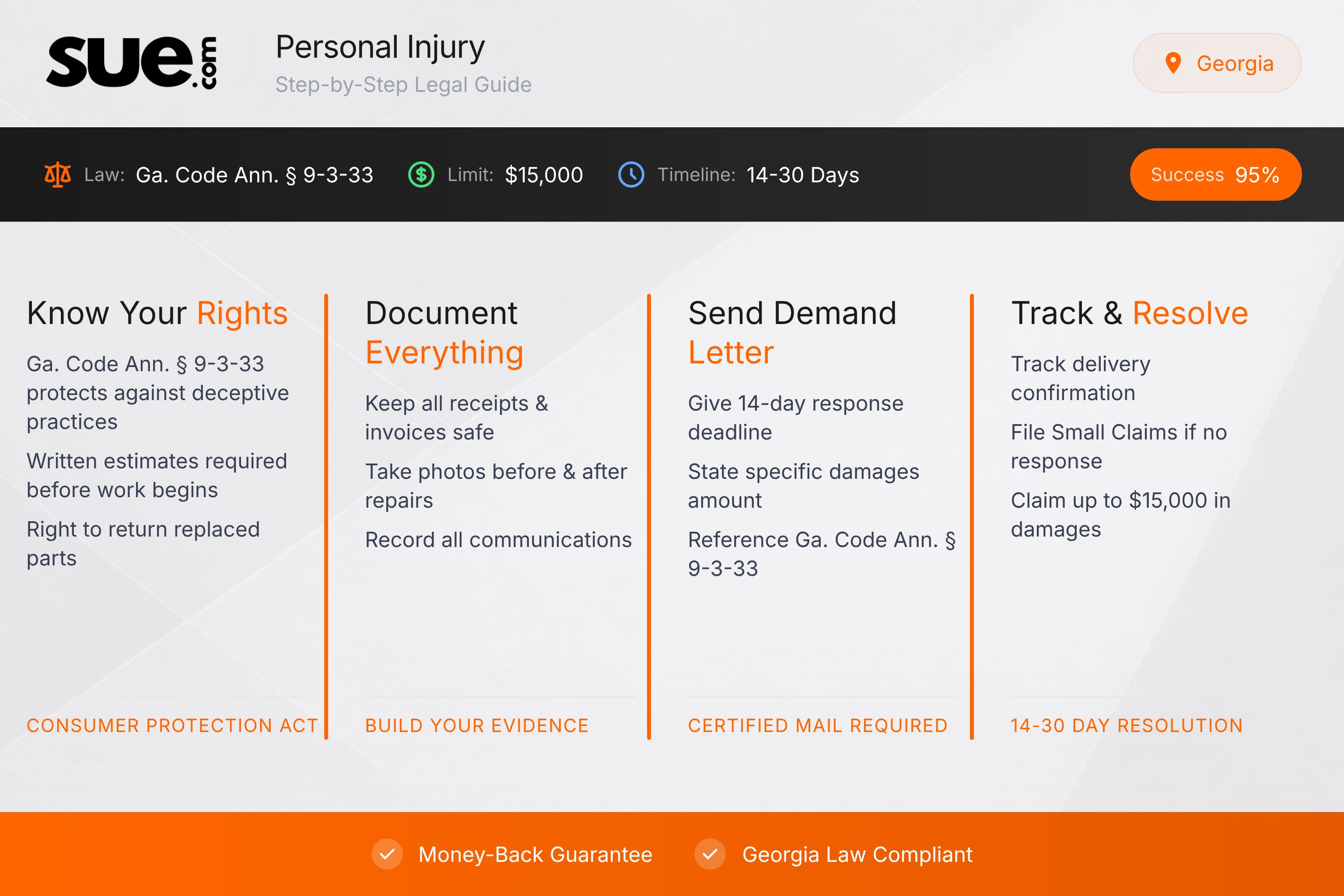
Filing Your Personal Injury Claim in Georgia: It's Simpler Than You Think
We understand that filling out legal paperwork probably isn’t how you wanted to spend your time, especially while you’re still recovering from an injury. But here’s the reassuring truth: thousands of Georgians successfully file personal injury claims in Magistrate Court every year without any legal background. The process is straightforward once you know the steps.
- Step 1: Get the Statement of Claim form from your county’s Magistrate Court clerk or website
- Step 2: Fill in your information, the defendant’s information, and describe what happened and how much you’re claiming
- Step 3: File your claim and pay the filing fee, typically between $45 and $75 depending on your county
- Step 4: The court handles serving the defendant, so you don’t have to confront them yourself
- Step 5: Attend your hearing, which is more like a conversation with the judge than a formal trial
You’ll need to file in the county where the injury happened or where the person who injured you lives. If you’re unsure where to file a lawsuit in Georgia, the Magistrate Court clerk can help point you in the right direction. Many Georgia counties now offer electronic filing through PeachCourt, though availability varies by county. Either way, the clerk’s office is there to help you navigate the process.
The defendant typically has 30 days to respond after being served. Your hearing will usually be scheduled within 30 to 45 days after that. The whole process, from filing to judgment, often takes two to three months.
Building Your Personal Injury Case in Georgia
Gathering evidence might feel overwhelming when you’re already dealing with pain and recovery, but this is actually where you have more power than you might realize. Personal injury cases are won with documentation, and you likely already have most of what you need.
- Medical records and bills: These prove your injuries are real and show exactly what treatment cost you
- Photos of your injuries: Pictures taken right after the incident and during recovery show the judge what you went through
- Incident documentation: Police reports, accident reports, or incident reports from businesses establish what happened
- Witness statements: Anyone who saw what happened can provide a written statement or testify at your hearing
- Proof of lost income: Pay stubs and a letter from your employer showing missed work days demonstrate financial harm
Calculating your damages doesn’t have to be complicated. Here’s an example of how to organize your claim:
| What You Lost | Amount |
|---|---|
| Emergency room visit and treatment | $3,200 |
| Follow-up doctor appointments | $850 |
| Physical therapy sessions | $1,400 |
| Lost wages (2 weeks missed work) | $1,800 |
| Pain and suffering | $2,750 |
| Your claim total | $10,000 |
When calculating pain and suffering, Georgia courts often use a multiplier of one to three times your actual medical expenses, depending on severity. You’re not alone in finding this part tricky. Sue for Georgia consumer fraud and personal injury claims both require careful damage calculations, and judges appreciate when claimants present organized, reasonable figures.
At your hearing, the judge will ask you to explain what happened and present your evidence. Speak clearly, stick to the facts, and let your documentation tell the story. You’ve got this.
How Sue.com Helps You Win Personal Injury Cases in Georgia
You’ve already been through enough dealing with your injury. The thought of navigating the legal system on top of everything else can feel like too much. That’s exactly why Sue.com’s Georgia legal case hub exists: to take the complexity off your plate so you can focus on healing.
For $249, our Small Claims Court service gives you everything you need:
- A professionally written demand letter to try resolving your claim without going to court
- A filing guide specific to Georgia Magistrate Court procedures
- All required forms identified and ready for your signature
- An evidence checklist tailored to personal injury cases
- A damages calculation worksheet to maximize your claim
- A hearing preparation guide so you know exactly what to expect
Many personal injury disputes settle after receiving a well-crafted demand letter. Our accident settlement demand letter Georgia service is included in your package, giving you the best chance to resolve this without a court date. If the other party doesn’t respond appropriately, you’ll have everything prepared to file your claim confidently.
You deserve compensation for what happened to you. We’re here to help you get it.
Step 1
Answer a Few Simple Questions
Tell us what happened — who owes you, how much, and why. Our system guides you step-by-step with no legal jargon.
Step 2
We Draft Your Georgia Demand Letter
Step 3
We Mail It for You

Ready to Send Your Georgia Demand Letter?
Need Assistance?
Need help?
Find answers
Got questions about how Sue.com works, what’s included in each package, or what happens after your letter is sent? We’ve got you covered — quick, clear answers to help you move forward with confidence.
1. What's the most I can recover for Personal Injury in Georgia?
Georgia Magistrate Court allows you to claim up to $15,000 for personal injury cases. This limit covers medical expenses, lost wages, property damage, and pain and suffering combined. If your damages exceed this amount, you may need to consider filing in State Court instead, though that process is more complex.
2. What evidence helps most in a Personal Injury case in Georgia?
Medical records are your strongest evidence because they directly connect your injuries to the incident. Photos taken immediately after the accident, witness statements, and any official reports also carry significant weight. Judges appreciate organized documentation, so presenting your evidence in a clear folder or binder shows you’re prepared and credible.
3. How long will my Personal Injury case take in Georgia?
Most Magistrate Court cases resolve within two to three months from filing to judgment. After you file, the defendant has 30 days to respond, and hearings are typically scheduled within 30 to 45 days after that. This timeline can feel long when you’re waiting, but it’s actually much faster than higher courts.
4. Do I really not need a lawyer for Personal Injury in Georgia?
Magistrate Court was specifically designed for self-representation, and judges are accustomed to working with people who aren’t attorneys. The informal setting and simplified procedures make it very manageable. Many Georgians successfully win personal injury claims on their own every year, and the filing fees are kept low to make justice accessible.
5. What if I win but they refuse to pay?
Georgia law gives you several collection tools if the defendant doesn’t pay voluntarily. You can request a garnishment of their wages or bank accounts, place a lien on their property, or have the sheriff levy their assets. The court clerk can provide the forms you need, and the judgment remains enforceable for seven years with the option to renew.