
Home » California » Small Claims Court » Personal Injury Dispute
Sue for Personal Injury in California Small Claims Court
Dealing with an injury caused by someone else’s negligence is exhausting, both physically and emotionally. You’re managing pain, medical appointments, and possibly missed work, all while wondering if you’ll ever see compensation for what happened to you. The good news is that California’s small claims system was designed for people in exactly your situation. You can Sue for medical bills in California and recover up to $12,500 without hiring an attorney or navigating complex legal procedures. This guide walks you through everything you need to know about filing a personal injury claim in California’s Superior Court Small Claims Division, from understanding the laws that protect you to presenting your case with confidence.
Personal Injury Laws That Help You Win in California
We understand that legal terminology can feel overwhelming when you’re already dealing with the stress of an injury. The reassuring news is that California law provides clear protections for people who’ve been hurt due to someone else’s carelessness. Under Cal. Civ. Proc. Code § 335.1, you have two years from the date of your injury to file a personal injury lawsuit. This statute of limitations gives you time to assess your damages and gather evidence, but it’s important not to wait too long.
To win your case, you’ll need to prove four key elements. First, the defendant owed you a duty of care, meaning they had a responsibility to act reasonably to prevent harm. Second, they breached that duty through negligent or reckless behavior. Third, their breach directly caused your injury. Fourth, you suffered actual damages as a result.
California follows a pure comparative negligence rule under Civil Code § 1714. This means even if you were partially at fault, you can still recover damages reduced by your percentage of responsibility. For example, if you’re awarded $10,000 but found 20% at fault, you’d receive $8,000. Many people worry this disqualifies them from filing, but that’s rarely the case.
The damages you can claim include medical expenses, lost wages, property damage, and pain and suffering. What counts as personal injury in California small claims? Essentially, any physical or emotional harm caused by another person’s negligence qualifies. Judges in California small claims courts regularly award compensation for car accidents, slip and fall injuries, dog bites, and similar incidents.
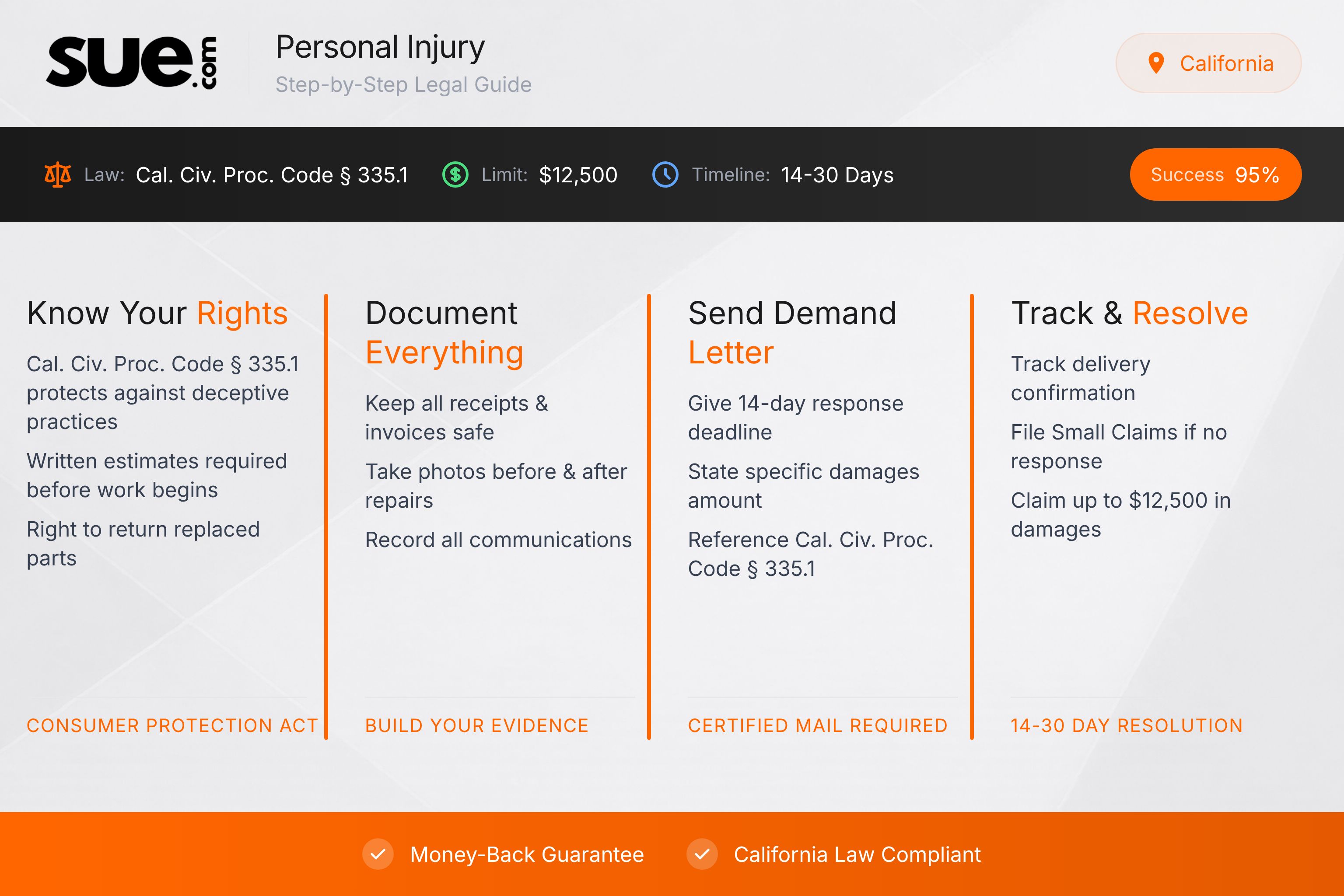
How to File a Personal Injury Claim in California
Filing paperwork might feel like the last thing you want to do while recovering from an injury, but the process in California is more straightforward than you might expect. The entire filing typically takes about 30 minutes once you have your documents ready. You’ll file your claim in the Superior Court Small Claims Division in the county where the injury occurred or where the defendant lives.
To begin, you’ll complete Form SC-100, the Plaintiff’s Claim and ORDER to Go to Small Claims Court. This form asks for basic information about you, the defendant, what happened, and how much you’re claiming. The filing fee ranges from $30 to $75 depending on your claim amount, and fee waivers are available if you qualify financially.
California’s small claims limit is $12,500 for most individuals. If your damages exceed this amount, you can still file in small claims court but must waive the excess. Some people choose this route because the speed and simplicity outweigh the reduced recovery.
Unfortunately, California small claims courts do not currently offer e-filing for personal injury cases. You’ll need to file in person or by mail at your local courthouse. Once filed, the court clerk will assign a hearing date, typically 30 to 70 days from filing. You’re responsible for serving the defendant with notice of the lawsuit, which can be done through certified mail or a process server. Sue for California recall compensation through the same court system if your injury involves a defective product.
Building Your Personal Injury Case in California
Preparing your case might feel daunting, but you’ve already lived through the hardest part. Now it’s about organizing what you know into a clear, compelling presentation. Judges appreciate well-prepared claimants, and strong evidence dramatically increases your chances of success.
Start by gathering all medical documentation related to your injury. This includes emergency room records, doctor’s notes, diagnostic imaging results, prescriptions, and receipts for any out-of-pocket medical expenses. Request itemized billing statements that show exactly what you paid or owe.
Photographs are incredibly powerful evidence. Pictures of your injuries taken immediately after the incident and during recovery tell a visual story that words cannot. If the incident involved property damage or a hazardous condition, photograph the scene as soon as safely possible.
Document your lost wages by obtaining a letter from your employer confirming your missed work and regular pay rate. Pay stubs from before and after the injury help establish your financial losses.
Witness statements can strengthen your case significantly. If anyone saw what happened, ask them to write down their account and provide their contact information. California small claims courts allow witnesses to testify, though written statements are often sufficient.
Calculate your damages carefully. Add up all economic losses like medical bills and lost income, then consider non-economic damages like pain and suffering. While California doesn’t have a strict formula, documenting the impact on your daily life helps judges understand your full losses. How to sue an estate in California court follows similar evidence requirements if your claim involves a deceased defendant.
On your hearing day, arrive early, dress professionally, and bring three copies of all documents. Speak calmly and stick to the facts. You’ve got this.
How Sue.com Helps You Win Personal Injury Cases in California
We know you’re juggling recovery with the stress of pursuing compensation, and you shouldn’t have to figure out the legal system alone. Sue.com California dispute services provides everything you need to file a strong personal injury claim for just $249.
Your package includes an attorney-drafted demand letter that often resolves cases before you even reach court. Many defendants settle once they receive a professional letter outlining their liability and your damages. If your case does proceed to court, you’ll receive a comprehensive filing guide tailored to California’s Superior Court Small Claims Division, pre-filled forms ready for your signature, and a detailed evidence checklist so nothing gets overlooked.
We also help you calculate your damages accurately, ensuring you claim everything you’re entitled to under California law. Our court preparation materials walk you through what to expect at your hearing and how to present your case effectively. Thousands of Californians have successfully recovered compensation using our system, and many tell us they felt genuinely prepared walking into the courtroom.
A California personal injury demand letter is often the first step toward resolution. You deserve compensation for what you’ve been through, and we’re here to help you get it.
Step 1
Answer a Few Simple Questions
Tell us what happened — who owes you, how much, and why. Our system guides you step-by-step with no legal jargon.
Step 2
We Draft Your California Demand Letter
Step 3
We Mail It for You

Ready to Send Your California Demand Letter?
Need Assistance?
Need help?
Find answers
Got questions about how Sue.com works, what’s included in each package, or what happens after your letter is sent? We’ve got you covered — quick, clear answers to help you move forward with confidence.
1. What is the small claims limit for personal injury in California?
California’s small claims limit is $12,500 for individual plaintiffs. If your damages exceed this amount, you can still file in small claims court but must waive the portion above the limit. Many people choose this option because the faster, simpler process outweighs the reduced recovery.
2. What evidence do I need for a personal injury case in California?
You’ll want medical records, bills, photographs of your injuries, documentation of lost wages, and any witness statements. The more thoroughly you document your damages and the defendant’s negligence, the stronger your case becomes. Judges respond well to organized, visual evidence.
3. How long does a personal injury case take in California?
Most small claims cases in California are heard within 30 to 70 days of filing. The hearing itself typically lasts 15 to 30 minutes. If you win, the defendant usually has 30 days to pay or appeal. The entire process is much faster than traditional civil court.
4. Do I need a lawyer for personal injury small claims in California?
No, and in fact, attorneys generally cannot represent parties in California small claims court. The system is designed for self-representation. With proper preparation and good evidence, you can present your case effectively on your own.
5. What happens if I win but they don't pay?
California provides several collection tools if a defendant doesn’t pay voluntarily. You can garnish wages, levy bank accounts, or place liens on property. The court clerk can provide information about these options, and the judgment remains valid for 10 years and can be renewed.