
Florida Small Claims Court Guide:
How to File and Win Your Case
Dealing with someone who owes you money can feel incredibly frustrating, especially when they refuse to pay what’s rightfully yours. You’re not alone in this situation, and Florida law provides a straightforward path to recover what you’re owed. Whether you’re pursuing a Small claims court Florida lawsuit against a contractor who botched a job or a former roommate who skipped out on rent, the County Court Small Claims Division allows you to seek up to $8,000 without hiring an attorney. This guide walks you through every step of the Florida small claims process, from filing your claim to collecting your judgment, so you can approach your case with confidence.
Get Started in Your State
We provide state-specific demand letter services across the country. Find your state below to see our tailored guides and packages for your exact dispute.
Florida Small Claims Court Guide: How to File and Win Your Case
Dealing with someone who owes you money can feel incredibly frustrating, especially when they refuse to pay what’s rightfully yours. You’re not alone in this situation, and Florida law provides a straightforward path to recover what you’re owed. Whether you’re pursuing a Small claims court Florida lawsuit against a contractor who botched a job or a former roommate who skipped out on rent, the County Court Small Claims Division allows you to seek up to $8,000 without hiring an attorney. This guide walks you through every step of the Florida small claims process, from filing your claim to collecting your judgment, so you can approach your case with confidence.
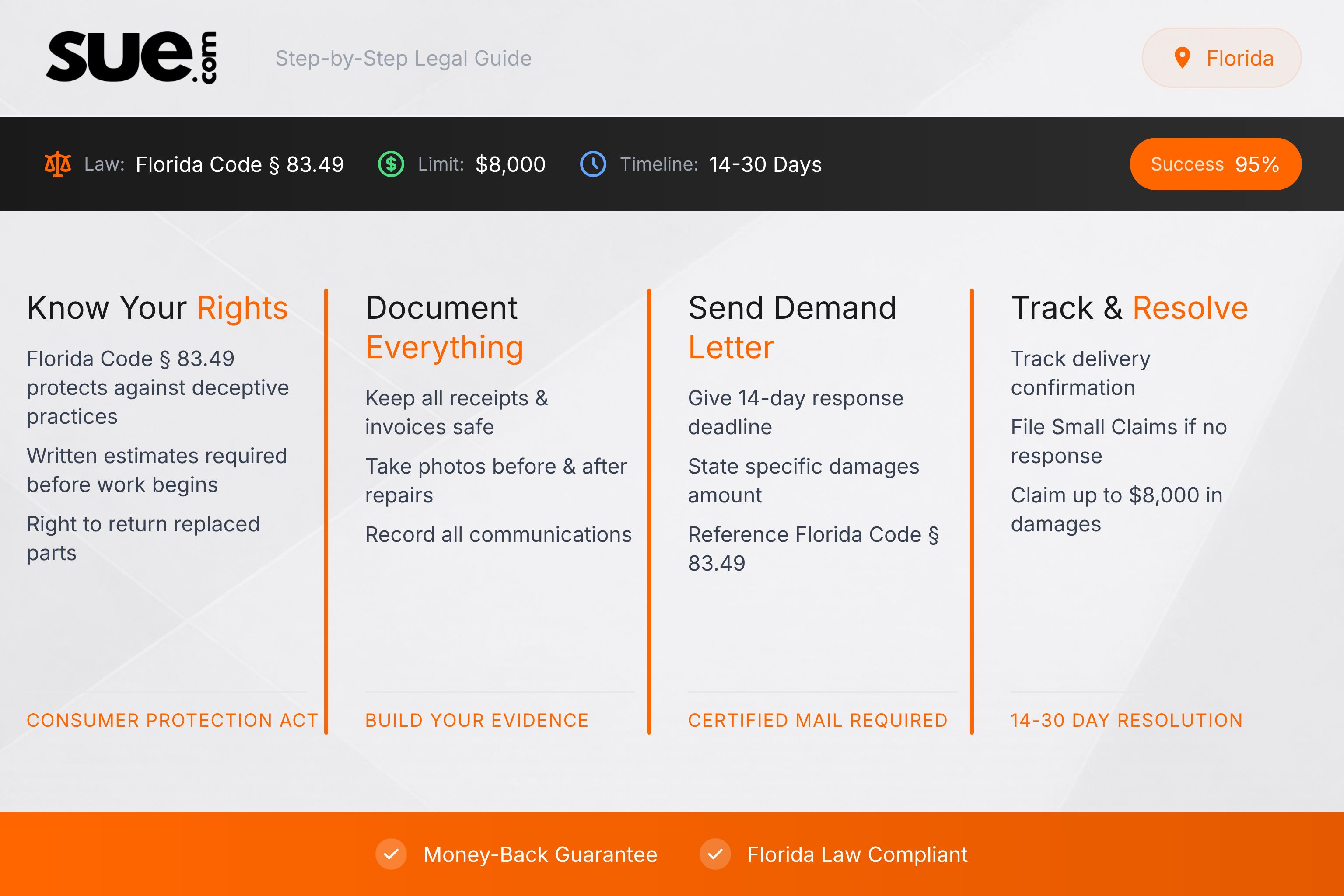
Florida County Court Small Claims Division Overview
We understand that navigating the court system can feel intimidating, but Florida’s small claims process was specifically designed to be accessible to everyday people. The County Court Small Claims Division handles civil disputes where the amount in controversy is $8,000 or less, not including costs, interest, and attorney fees. This court exists precisely for situations like yours, where hiring a lawyer might cost more than the dispute itself.
Any individual who is at least 18 years old can file a small claims case in Florida. You can also sue as a business, though corporations must be represented by an attorney unless the case involves only the collection of a debt. The defendant, meaning the person or business you’re suing, can be anyone who owes you money or caused you financial harm. This includes individuals, businesses, landlords, contractors, and even government entities in certain situations.
The types of cases you can bring include unpaid debts, security deposit disputes, property damage claims, breach of contract, and consumer protection violations. Florida law under How to sue in Florida small claims requires you to file your case in the county where the defendant lives, where the contract was signed, or where the incident occurred. This gives you flexibility in choosing the most convenient location.
While attorneys are permitted in Florida small claims court, they are absolutely not required. In fact, many judges appreciate when parties represent themselves because it keeps proceedings straightforward and focused on the facts. If you do win your case but the other party appeals, the appeal goes to the Circuit Court. Judgments in Florida remain valid and collectible for 20 years, giving you ample time to recover what you’re owed.
Florida Laws That Help You Win
Understanding the laws that support your case can feel empowering, and Florida has several strong consumer protection statutes on your side. These laws often provide for additional damages beyond what you’re owed, which can motivate defendants to settle quickly.
Florida Security Deposit Law (Florida Statutes § 83.49) protects tenants who’ve been wrongfully denied their deposits. Under this law, landlords must return your security deposit within 15 days if no deductions are claimed, or provide written notice of deductions within 30 days. If your landlord fails to comply, you may be entitled to the full deposit amount plus reasonable attorney fees if you hire one. This statute is particularly powerful because it places strict requirements on landlords.
Florida Deceptive and Unfair Trade Practices Act (FDUTPA, Florida Statutes § 501.201-501.213) helps consumers who’ve been deceived by businesses. If a company used misleading advertising, hidden fees, or fraudulent practices, you can recover your actual damages plus attorney fees and court costs. This law covers everything from auto repair scams to deceptive sales tactics.
Florida Bad Check Law (Florida Statutes § 68.065) provides strong remedies when someone pays you with a check that bounces. You can recover the face amount of the check, a service charge of up to $25 for checks under $50 (or $30 for checks between $50 and $300, or $40 for checks over $300), plus triple damages up to $1,500 if the check writer doesn’t pay within 30 days of your written demand.
Florida Construction Lien Law (Florida Statutes Chapter 713) protects homeowners who’ve paid contractors who failed to complete work or used the money improperly. This law provides mechanisms for recovering payments made to contractors who abandoned projects or performed substandard work.
Common Florida Small Claims Cases
You might be wondering if your specific situation qualifies for small claims court. The good news is that Florida’s County Court Small Claims Division handles a wide variety of disputes. Here are the most common types of cases, and you’ll likely recognize your situation among them.
Security deposit disputes are among the most frequently filed cases. Florida’s strict landlord requirements under § 83.49 make these cases very winnable for tenants who documented their move-out condition. Unpaid rent and lease violations work both ways, allowing landlords to pursue former tenants for unpaid amounts.
Auto repair and purchase disputes arise when mechanics overcharge, perform unauthorized work, or sell vehicles with undisclosed problems. Florida’s FDUTPA provides strong protections in these situations. Contractor and home improvement disputes cover situations where work was incomplete, substandard, or never started despite payment.
Property damage claims include situations where someone’s negligence damaged your vehicle, home, or personal belongings. Unpaid loans and personal debts allow you to pursue friends, family members, or acquaintances who borrowed money and haven’t repaid it.
Consumer fraud and scam recovery cases use FDUTPA to pursue businesses that engaged in deceptive practices. Breach of contract claims cover any written or verbal agreement where the other party failed to fulfill their obligations.
Wage and payment disputes can sometimes be pursued in small claims court when employers owe relatively small amounts. Pet-related disputes include veterinary malpractice, dog bite damages, or breeder misrepresentation cases.
The Florida Small Claims Court Process
The small claims process might seem overwhelming at first, but thousands of Floridians successfully navigate it every year. Breaking it down into clear steps makes the journey much more manageable.
Step 1: Send a Demand Letter. Before filing your case, Florida courts expect you to make a good-faith effort to resolve the dispute. A formal demand letter puts the other party on notice and often results in settlement without court involvement. Your letter should clearly state what’s owed, why it’s owed, and a deadline for payment, typically 10 to 14 days.
Step 2: File Your Statement of Claim. Visit the clerk of court in the appropriate county and complete the Statement of Claim form. You’ll need the defendant’s full legal name and address. Filing fees range from approximately $55 to $300 depending on the amount you’re claiming. The clerk will assign a case number and hearing date.
Step 3: Serve the Defendant. Florida requires formal service of process, meaning you can’t simply mail the paperwork yourself. Options include service by the sheriff’s office (typically $40), a private process server, or certified mail with return receipt in some circumstances. The defendant must be served at least 5 days before the hearing for cases within the county.
Step 4: Prepare Your Evidence. This is where many cases are won or lost. Gather all relevant documents including contracts, receipts, photographs, text messages, emails, and any written communications. Organize everything chronologically and make copies for the court and defendant.
Step 5: Attend Your Hearing. Arrive early, dress professionally, and bring all your evidence. Many Florida counties require pretrial mediation, where a neutral mediator helps both parties try to reach a settlement. If mediation fails, you’ll present your case to the judge. Speak clearly, stick to the facts, and let your evidence tell the story.
Step 6: Collect Your Judgment. Winning your case is a significant accomplishment, but collecting can sometimes require additional effort. If the defendant doesn’t pay voluntarily, Florida law provides collection tools including wage garnishment, bank account levies, and property liens.
How Sue.com's Florida Small Claims Court Package Works
We know that preparing a legal case while managing your daily life can feel like a lot to handle. That’s exactly why we created our $249 Florida Small Claims Court Package, designed to give you everything you need to file confidently and maximize your chances of winning.
Under Formal demand for payment Florida, sending a professional demand letter is often the most effective first step, and it’s included in your package. Our attorneys ghostwrite a compelling demand letter tailored to your specific situation and Florida law, which frequently results in payment before you ever step foot in court.
Your package also includes a comprehensive filing guide that identifies exactly which Florida county court to file in and walks you through completing the Statement of Claim correctly. We provide a complete evidence checklist customized to your case type, ensuring you don’t miss critical documentation. Our damage calculation worksheet helps you identify all recoverable amounts under Florida law, including statutory penalties you might not know you’re entitled to.
Through Sue.com’s Florida legal tools, you’ll receive court preparation materials that explain what to expect at your hearing and how to present your case effectively. You’ve got this, and we’re here to make sure you’re fully prepared.
Step 1
Answer a Few Simple Questions
Tell us what happened — who owes you, how much, and why. Our system guides you step-by-step with no legal jargon.
Step 2
We Draft Your Florida Demand Letter
Your answers are reviewed and used to create an attorney-drafted demand letter tailored to your case.
Step 3
We Mail It for You

Ready to Send Your Florida Demand Letter?
Need Assistance?
Need help?
Find answers
Got questions about how Sue.com works, what’s included in each package, or what happens after your letter is sent? We’ve got you covered — quick, clear answers to help you move forward with confidence.
1. What is the small claims court limit in Florida?
The maximum amount you can sue for in Florida’s County Court Small Claims Division is $8,000, not including court costs and interest. If your claim exceeds this amount, you can either waive the excess and still file in small claims court, or file in County Court’s regular civil division for claims up to $30,000.
2. How much does it cost to file in Florida County Court Small Claims Division?
Filing fees in Florida small claims court range from approximately $55 to $300, depending on the amount of your claim. Additional costs include service of process fees (typically $40 for sheriff service) and any witness fees if applicable. These costs can usually be recovered from the defendant if you win.
3. Do I need a lawyer for Florida County Court Small Claims Division?
No, you absolutely do not need a lawyer for Florida small claims court. The system was designed for self-representation, and judges are accustomed to working with parties who don’t have legal training. Many people successfully handle their own cases with proper preparation.
4. How long does a Florida small claims case take?
Most Florida small claims cases are resolved within 30 to 60 days from filing to judgment. The timeline depends on court scheduling, whether mediation is required, and how quickly you can serve the defendant. Some counties move faster than others.
5. What if the defendant doesn't show up to court?
If the defendant fails to appear after being properly served, the judge will likely enter a default judgment in your favor. You’ll still need to present basic evidence supporting your claim and the amount you’re seeking. Default judgments are fully enforceable.
6. What if I win but they refuse to pay?
Florida provides several collection remedies including wage garnishment, bank account levies, and property liens. Judgments remain valid for 20 years and accrue interest. You can also return to court to conduct a debtor’s examination, requiring the defendant to disclose their assets under oath.