
How to Write and Send a
Demand Letter in Georgia
Under Georgia law, a formal demand letter constitutes the essential first step in pursuing civil remedies for monetary disputes. Pursuant to O.C.G.A. § 13-6-11, a claimant who fails to provide written demand prior to litigation may be barred from recovering attorney fees and expenses of litigation. A properly drafted Demand letter for Georgia towing fees establishes a documented record of the respondent’s obligation and creates a statutory deadline for compliance. The demand letter serves as evidence of good faith efforts to resolve the matter, which Georgia courts consider when awarding damages and costs. This formal notice is recognized as a prerequisite to effective litigation in Magistrate Court proceedings.
Get Started in Your State
We provide state-specific demand letter services across the country. Find your state below to see our tailored guides and packages for your exact dispute.
How to Write and Send a Demand Letter in Georgia
Under Georgia law, a formal demand letter constitutes the essential first step in pursuing civil remedies for monetary disputes. Pursuant to O.C.G.A. § 13-6-11, a claimant who fails to provide written demand prior to litigation may be barred from recovering attorney fees and expenses of litigation. A properly drafted Demand letter for Georgia towing fees establishes a documented record of the respondent’s obligation and creates a statutory deadline for compliance. The demand letter serves as evidence of good faith efforts to resolve the matter, which Georgia courts consider when awarding damages and costs. This formal notice is recognized as a prerequisite to effective litigation in Magistrate Court proceedings.
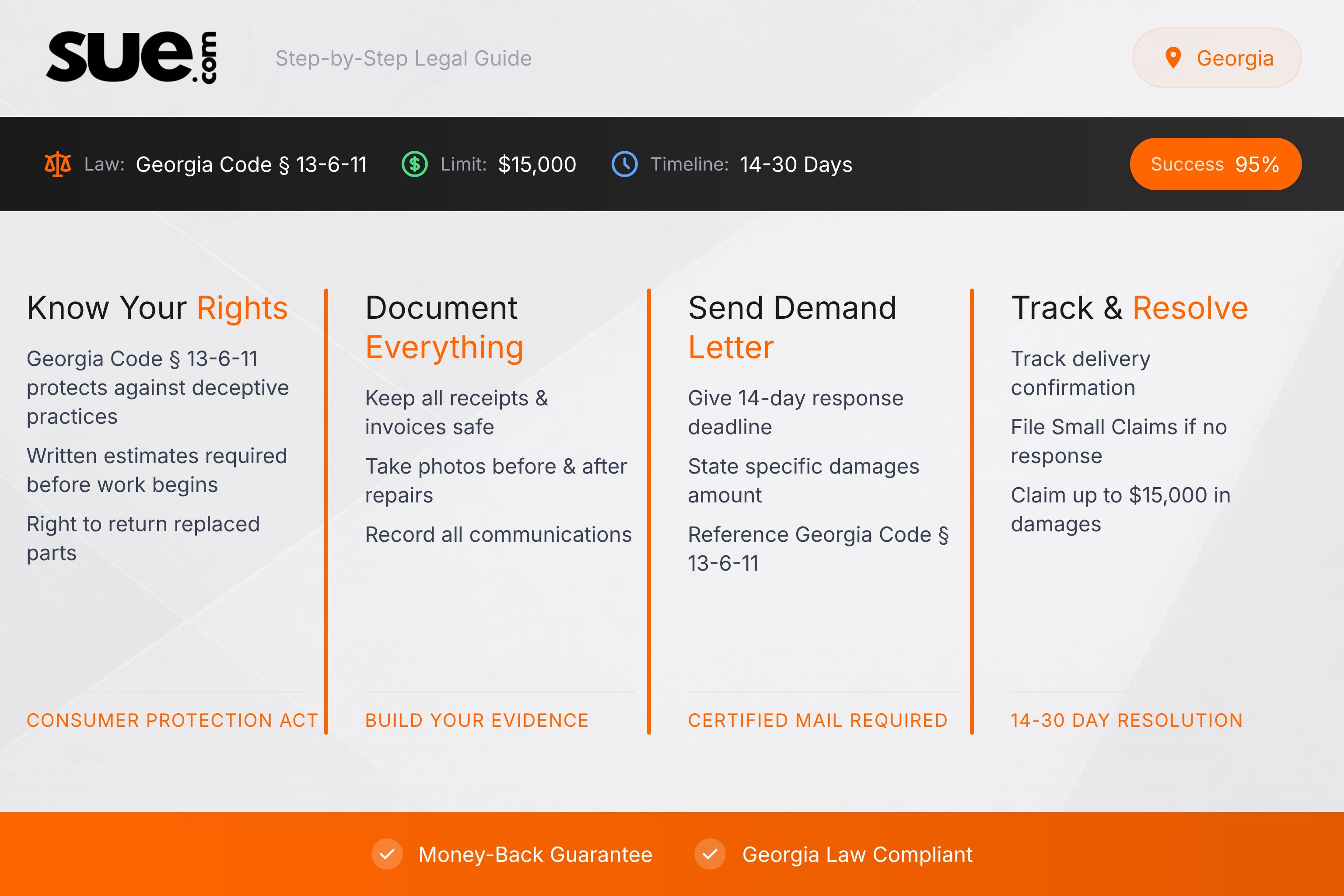
Legal Basis for Demand Letters in Georgia
Pursuant to O.C.G.A. § 13-6-11, the recovery of litigation expenses in Georgia requires proof that the defending party acted in bad faith or was stubbornly litigious. A formal demand letter establishes the claimant’s good faith attempt at resolution and documents the respondent’s refusal to comply with lawful obligations. Georgia courts have consistently held that pre-suit demand demonstrates the reasonableness of the claimant’s position.
| Statute | Requirement | Notice Period | Consequence |
|---|---|---|---|
| O.C.G.A. § 44-7-34 | Security deposit demand | 30 days | Treble damages plus attorney fees |
| O.C.G.A. § 10-1-399 | FBPA written notice | 30 days | Required for private right of action |
| O.C.G.A. § 13-6-11 | Pre-suit demand | Reasonable period | Recovery of litigation expenses |
The Georgia Court of Appeals has affirmed that demand letters create a presumption of the claimant’s good faith when the matter proceeds to litigation. Under O.C.G.A. § 9-11-68, offers of settlement made after formal demand may entitle the prevailing party to attorney fees if the judgment exceeds the rejected offer. A Demand letter for Georgia verbal agreements provides the documentary foundation necessary to pursue these enhanced remedies. The absence of formal demand may result in judicial findings that the claimant failed to mitigate damages or acted unreasonably in proceeding directly to litigation.
Georgia Statutes That Strengthen Your Demand
The citation of specific Georgia statutes in a demand letter creates substantial pressure for compliance by informing the respondent of potential statutory penalties and enhanced damages.
- O.C.G.A. § 44-7-34 (Landlord-Tenant Security Deposits): This statute requires landlords to return security deposits within 30 days of lease termination or provide a written statement of deductions. Failure to comply entitles the tenant to recover three times the amount wrongfully withheld plus reasonable attorney fees. Citation of this statute in a demand letter demonstrates knowledge of the treble damage provision and creates immediate financial exposure for non-compliant landlords.
- O.C.G.A. § 10-1-393 (Fair Business Practices Act): The Georgia FBPA prohibits unfair and deceptive trade practices in consumer transactions. Violations may result in actual damages, injunctive relief, and reasonable attorney fees pursuant to O.C.G.A. § 10-1-399. Written notice of the claimed violation is a statutory prerequisite to filing a private action under this chapter.
- O.C.G.A. § 51-12-14 (Conversion of Property): This statute provides for the recovery of the value of converted property plus interest from the date of conversion. In cases of willful conversion, punitive damages may be awarded pursuant to O.C.G.A. § 51-12-5.1. A demand letter citing this statute establishes the date from which interest accrues.
- O.C.G.A. § 13-6-11 (Expenses of Litigation): This statute permits recovery of attorney fees and litigation costs when the opposing party has acted in bad faith or been stubbornly litigious. A demand letter creates the evidentiary foundation for proving that the respondent’s refusal to pay was unreasonable.
Common Georgia Disputes Requiring Formal Demand
The following categories of disputes are subject to resolution through Georgia Magistrate Court, which maintains jurisdiction over civil claims up to $15,000. Each category implicates specific Georgia statutes that should be cited in the demand letter.
| Dispute Category | Key Georgia Statute | Notice Requirement |
|---|---|---|
| Security Deposit | O.C.G.A. § 44-7-34 | 30 days for landlord response |
| Auto Repair | O.C.G.A. § 10-1-393 | 30 days FBPA notice |
| Contractor Disputes | O.C.G.A. § 8-2-35 | Written notice required |
| Personal Injury | O.C.G.A. § 9-3-33 | 2-year limitations period |
| Property Damage | O.C.G.A. § 51-12-14 | Reasonable demand period |
| Unpaid Invoice | O.C.G.A. § 13-6-11 | Demand preserves fee recovery |
| Breach of Contract | O.C.G.A. § 13-4-2 | Written notice of breach |
| Defective Product | O.C.G.A. § 51-1-11 | Notice to manufacturer |
| Neighbor Disputes | O.C.G.A. § 44-9-1 | Demand for abatement |
| Professional Services | O.C.G.A. § 9-3-25 | 4-year limitations period |
Security deposit disputes constitute the most common category of claims filed in Georgia Magistrate Court. Pursuant to O.C.G.A. § 44-7-34, landlords who fail to return deposits or provide itemized deductions within the statutory period face treble damage liability. Auto repair and contractor disputes frequently implicate the Fair Business Practices Act, which requires 30 days written notice before a private action may be commenced.
Breach of contract claims in Georgia are governed by a six-year statute of limitations under O.C.G.A. § 9-3-24 for written contracts and four years for oral agreements. The demand letter should specify the contractual provision allegedly breached and the damages resulting therefrom.
The Georgia Demand Letter Process: Procedural Requirements
The following procedural steps shall be observed when preparing and transmitting a formal demand letter under Georgia law.
Step 1: Document the Claim. All evidence supporting the claim must be gathered and preserved. This includes contracts, receipts, photographs, correspondence, and witness statements. Pursuant to O.C.G.A. § 24-1-1, documentary evidence must be authenticated for admission in court proceedings.
Step 2: Research Applicable Georgia Statutes. The specific Georgia code sections governing the dispute must be identified. Citation of relevant statutes in the demand letter establishes the legal basis for the claim and informs the respondent of potential penalties.
Step 3: Calculate Damages. The total amount owed must be calculated with specificity, including principal, statutory interest pursuant to O.C.G.A. § 7-4-2 (currently 7% per annum), and any applicable statutory penalties.
Step 4: Draft the Demand with Statutory Citations. The demand letter must identify the parties, state the factual basis for the claim, cite applicable statutes, specify the amount demanded, and establish a deadline for response.
Pursuant to O.C.G.A. § 44-7-34, this letter constitutes formal demand for the return of the security deposit in the amount of $2,500. Under Georgia law, failure to return the deposit or provide an itemized statement of deductions within 30 days of lease termination entitles the tenant to recover three times the amount wrongfully withheld. Failure to respond within 14 days of receipt shall result in the filing of a claim in Magistrate Court.
Step 5: Send via Certified Mail. The demand letter shall be transmitted via United States Postal Service certified mail with return receipt requested. This method provides documented proof of delivery admissible under O.C.G.A. § 24-9-902.
Step 6: Document and Preserve the Record. Copies of the demand letter, certified mail receipt, and return receipt must be retained. These documents constitute evidence of good faith compliance with pre-suit demand requirements.
Professional Georgia Demand Letter Services
Professional demand letter services ensure compliance with Georgia statutory requirements while creating maximum pressure for voluntary resolution. The $199 service includes attorney-drafted correspondence that cites applicable Georgia statutes and establishes enforceable deadlines.
- Attorney-drafted correspondence citing Georgia statutes including O.C.G.A. § 44-7-34, O.C.G.A. § 10-1-393, and O.C.G.A. § 13-6-11
- Certified mail delivery with return receipt pursuant to O.C.G.A. § 24-9-902
- Statutory compliance review ensuring proper notice periods are observed
- Escalation path to Magistrate Court for claims up to $15,000
If the respondent fails to comply with the demand, Sue for Georgia towing overcharge provides a clear path to recover damages in Magistrate Court. Georgia Magistrate Court filing fees range from $45 to $75 depending on the county and claim amount. Through Sue.com’s Georgia court tools, claimants may pursue the full range of remedies available under Georgia law, including statutory damages, interest, and litigation expenses.
Step 1
Answer a Few Simple Questions
Tell us what happened — who owes you, how much, and why. Our system guides you step-by-step with no legal jargon.
Step 2
We Draft Your Georgia Demand Letter
Your answers are reviewed and used to create an attorney-drafted demand letter tailored to your case.
Step 3
We Mail It for You

Ready to Send Your Georgia Demand Letter?
Need Assistance?
Need help?
Find answers
Got questions about how Sue.com works, what’s included in each package, or what happens after your letter is sent? We’ve got you covered — quick, clear answers to help you move forward with confidence.
1. Is a demand letter a legal prerequisite to filing suit in Georgia?
Pursuant to O.C.G.A. § 10-1-399, written notice is required before filing a private action under the Fair Business Practices Act. Under O.C.G.A. § 13-6-11, the absence of pre-suit demand may preclude recovery of attorney fees and litigation expenses.
2. Which Georgia statutes should be cited in a demand letter?
The applicable statutes depend on the nature of the dispute. Security deposit claims should cite O.C.G.A. § 44-7-34. Consumer disputes should reference O.C.G.A. § 10-1-393. All demand letters should cite O.C.G.A. § 13-6-11 to preserve the right to recover litigation expenses.
3. What constitutes a reasonable response period in Georgia?
Georgia courts have held that 14 to 30 days constitutes a reasonable response period for demand letters. Certain statutes, such as O.C.G.A. § 44-7-34, impose specific 30-day deadlines that must be observed.
4. What remedies are available if the demand is not honored?
Claims up to $15,000 may be filed in Georgia Magistrate Court. Pursuant to applicable statutes, remedies may include actual damages, statutory penalties (including treble damages under O.C.G.A. § 44-7-34), interest at 7% per annum, and attorney fees.
5. Is professional drafting required for a Georgia demand letter?
Professional drafting is not legally required. However, attorney-drafted demand letters ensure proper statutory citations, correct calculation of damages, and compliance with notice requirements that may affect the recovery of enhanced damages.
6. How is delivery of a demand letter documented in Georgia?
Certified mail with return receipt requested provides admissible proof of delivery pursuant to O.C.G.A. § 24-9-902. The return receipt establishes the date of delivery, which triggers statutory response periods.